
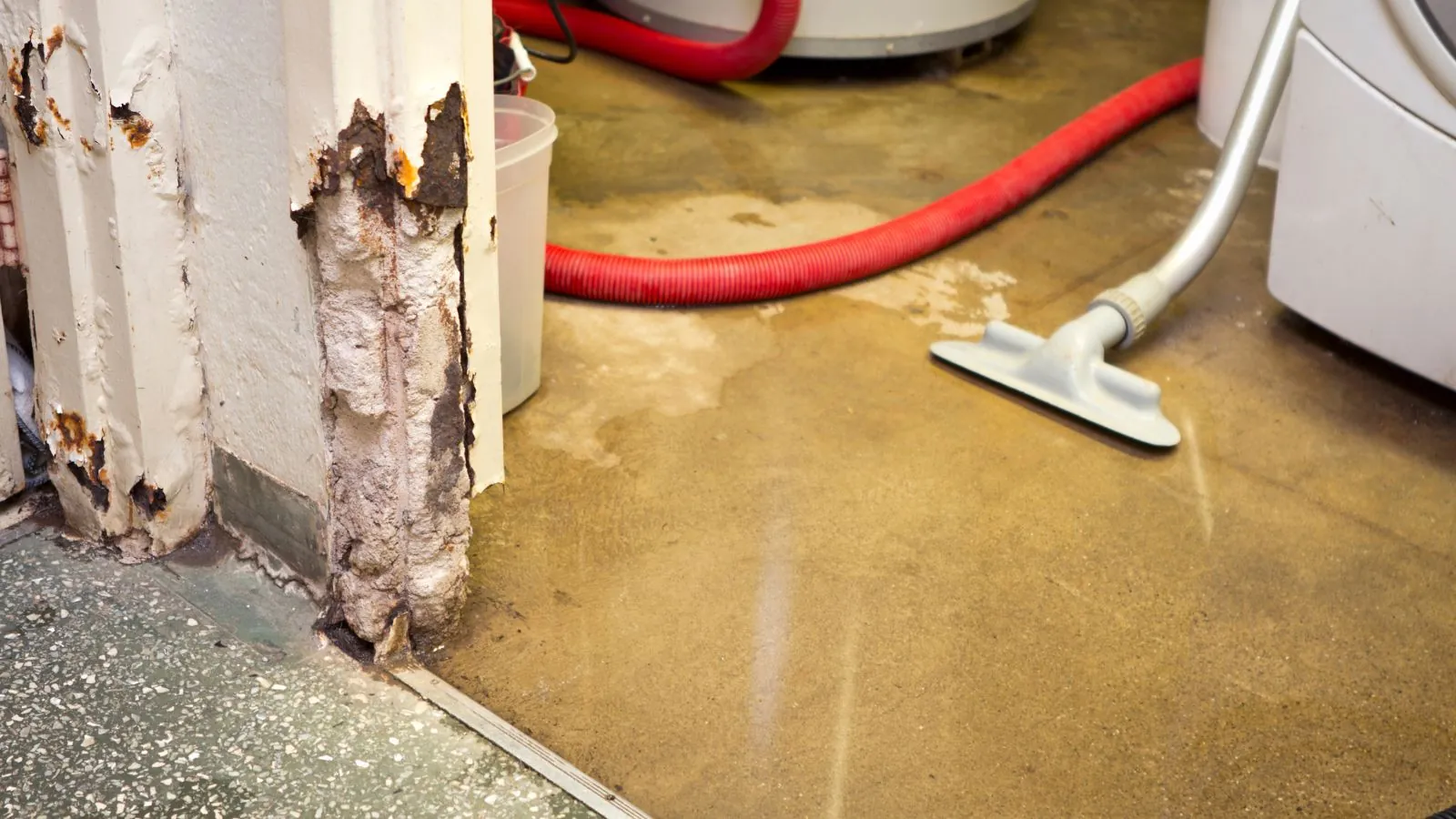
Standing water in a Parsippany home is an emergency from the first hour, and this line is open 24/7 so a dispatch can start at any time. While you wait, stop the source if you can, close the main water valve, lift valuables off the floor and keep people and pets out of the water.
Water extraction is the first stage of water damage restoration in Parsippany, NJ. Crews remove standing water with submersible pumps, portable and truck-mounted extraction units and wet vacuums so drying equipment can work on what is left. The sooner the water is out, the less of it reaches drywall, insulation and the subfloor.
When standing water is an emergency
Depth matters less than spread. One inch of water across a 1,000 square foot floor is about 620 gallons, and that much water finds the baseboards, the cabinet toe kicks and the floor seams within minutes. Wood, drywall and insulation start wicking right away.
Treat any water that touches outlets, power strips, appliances or the electrical panel as an electrical hazard. Stay out, cut power only if you can reach the panel while standing on dry ground, and call the utility or 911 for any electrical or gas concern before you call the restoration line.
Stop the source
Close the fixture shutoff, the appliance valve or the main water valve. If the water is rising from outside or from a drain, do not walk into it.
Protect people first
Keep children, pets and anyone unsteady out of the room. Water that came from a drain or toilet should be treated as contaminated.
Lift what you can
Raise small furniture, rugs, electronics and boxes onto counters or plastic. Do not move heavy items if the floor is slick.
Take photos
Photograph the water line, the source and affected items before anything is moved. Photos help later with an insurance claim.
Water on the floor? Start extraction now
The 24/7 line connects you to a crew that can pump, extract and begin drying.
How extraction works, tool by tool
Crews choose the tool by depth and by what the water sits on. Submersible pumps handle deep water in basements and garages, with hoses run out a door or to a proper discharge point. Once the level drops to a film, wet vacuums and extraction wands take over.
On carpet and pad, a weighted extraction wand pulls water from the fibers and the pad underneath. On hard floors, squeegees and wet vacuums collect water from seams and corners. Truck-mounted units add suction for large areas, such as a flooded office suite or a finished basement.
Extraction is not the end of the job. Even after the visible water is gone, moisture stays in drywall, framing and subfloor. That is why extraction is followed by structural drying and dehumidification, with moisture readings taken so the crew knows when the building is actually dry.
Which extraction method fits the water
| Situation | Typical method | What follows |
|---|---|---|
| Deep water in a basement or garage. | Submersible pump, then wet vacuum. | Drying equipment and a check of what is still wet. |
| Soaked carpet and pad. | Extraction wand, pad removal if needed. | Air movers and a dehumidifier on the room. |
| Film of water on tile or vinyl. | Wet vacuum and squeegee. | Moisture readings along walls and cabinets. |
| Water from a drain, toilet or outside source. | Extraction with protective gear. | Removal of porous materials, see sewage backup cleanup. |
| Large commercial floor. | Truck-mounted or portable extraction units. | Drying plan that limits downtime. |
Why water moves fast in Parsippany
The township sits among the Rockaway, Whippany and Passaic river systems, and Morris County's hazard mitigation plan includes an annex for Parsippany-Troy Hills. The Lake Hiawatha area flooded in August 2011 during Hurricane Irene, and the township later studied the causes and wrote a Lake Hiawatha flood project into its code.
Few homes face that kind of river event, but ordinary storms, failed sump pumps and burst supply lines fill basements all the same. Check the FEMA flood map for your address, and see the basement water damage page if the water is below grade. Crews also run out to East Hanover and the other nearby Morris County towns.
The ANSI/IICRC S500 standard guides professional water damage work, including how water is classified and how drying is verified after extraction. Ask any contractor which standard they follow.
What affects the cost of water extraction
Price depends on the job, so a number over the phone before anyone sees the water is a guess. Scope and price should be explained before work starts, and these factors drive the answer.
Water category
Clean supply water costs less to handle than gray or black water, which needs protective gear and more removal.
Depth and area
Pumping a flooded basement is a different job from vacuuming a wet kitchen.
Access
Stairs, tight doorways and distance to a discharge point change the equipment and hours.
Materials involved
Carpet pad, insulation and drywall that cannot be saved add removal work.
Time on site
Hours of pumping and the follow-up drying days add up the same way on any job.
Sudden and accidental water damage is often covered by homeowners insurance, while flood damage usually needs a separate flood policy. Check your policy or ask your insurer, and photograph everything before it is moved.
Water extraction questions from Parsippany homeowners
Yes. The line is open 24/7, including nights, weekends and holidays. Same-day response is offered when a crew is available, and the dispatcher will tell you what to do while you wait.
Small jobs can finish in a few hours. A flooded basement may take most of a day, and drying continues for several days after the water is out.
For a small spill, yes. For anything larger, a household vacuum cannot keep up and does not reach water in the pad, seams and wall bases.
Not always. Water from a drain, toilet or outside source can carry contaminants, and water near electricity is a shock risk. Stay out until the source and power are sorted.
No. Extraction removes the standing water, but the building still has to be dried. Materials left wet beyond 24 to 48 hours can start to grow mold, per EPA guidance.
The water line on walls, the source of the leak, damaged items and any appliance labels. Take them before anything is moved.