
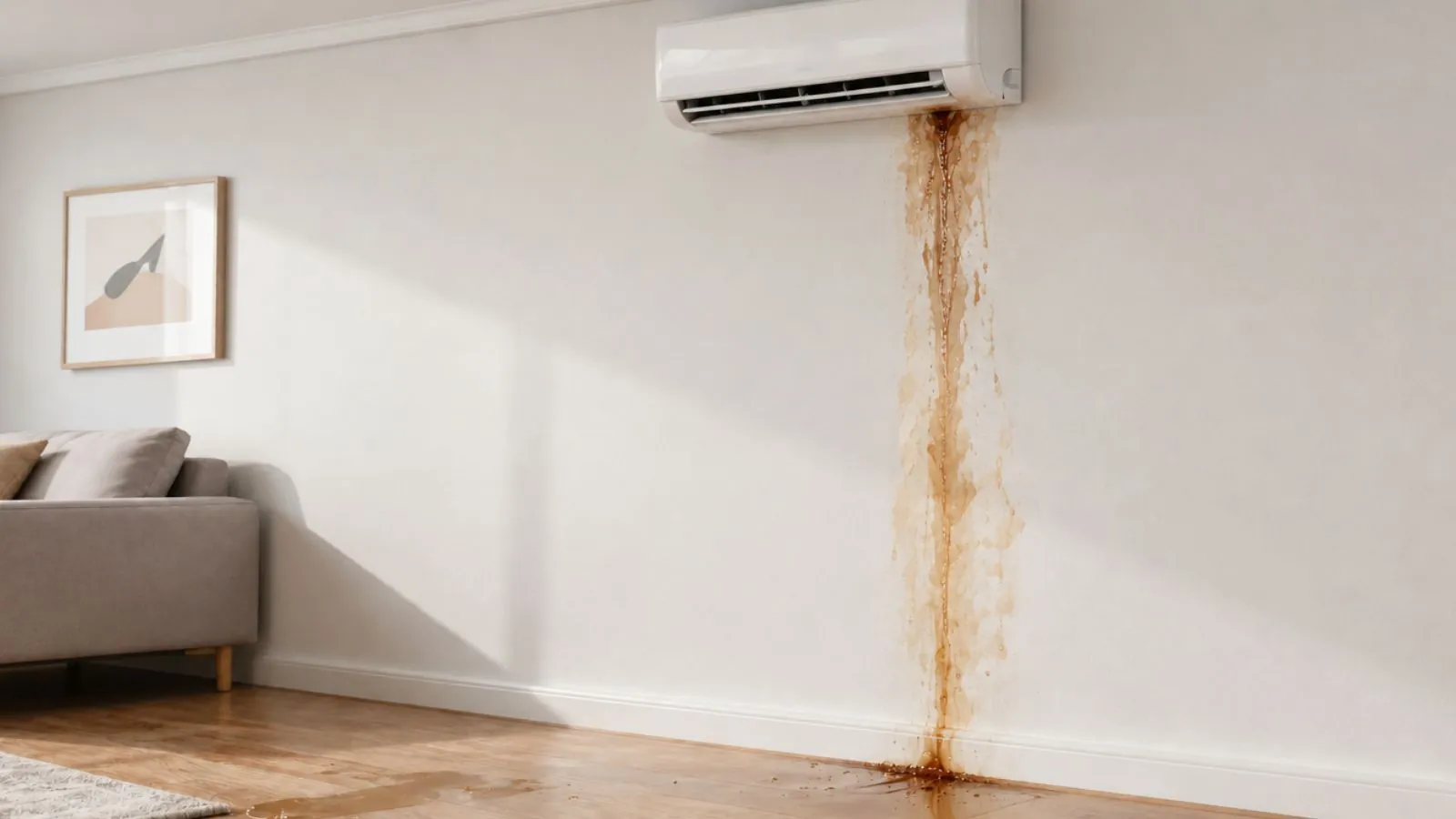
An air conditioner that drips onto a ceiling or wall often starts with a blocked condensate line. A cooling system pulls gallons of water from humid New Jersey summer air each day, and that water should drain away. When the line clogs or the pan cracks, it overflows into the building.
AC leak water damage repair in Parsippany, NJ starts by shutting off the system so it stops producing water. Then crews locate the wet areas, dry the cavity and plan the repair. An HVAC technician repairs the drain line or the unit itself.
How an air conditioner makes water
Cooling air removes humidity, and that water collects in a drain pan under the evaporator coil. A condensate line carries it to a drain or outside. Algae and sediment gradually clog that line, and the pan fills.
In a summer with high humidity, a system can produce several gallons a day. When the pan overflows, the water runs into the ceiling, down the wall or across the floor near the air handler. Attic and closet units are common culprits because nobody looks at them.
Where AC leaks show up
AC leak staining a ceiling? Call to book
The crew can find the wet areas, dry the cavity and schedule the repair.
| Unit location | Where the damage shows | Typical cause |
|---|---|---|
| Attic air handler. | Ceiling stain below the unit. | Clogged drain line or rusted pan. |
| Closet air handler. | Closet floor, baseboards, hallway. | Overflow from a blocked line. |
| Basement air handler. | Floor drain area and nearby walls. | Failed pump or disconnected line. |
| Window unit. | Wall and floor under the window. | Tilted unit or blocked drain hole. |
| Ductwork. | Condensation on cold duct surfaces. | Missing insulation in humid spaces. |
What to do first
Turn the system off
Switch off the thermostat and the air handler breaker so it stops making water.
Catch what is dripping
Place a bucket and towels, and move furniture away from the stain.
Check the pan
If you can see the drain pan, look for standing water or a cracked edge. Do not climb into an attic if it is unsafe.
Call two pros
An HVAC technician fixes the line, and the restoration crew dries the structure.
Drying after a condensate overflow
Condensate water is generally clean at the start, but it picks up dust and algae as it runs through insulation. In an attic, wet fiberglass is heavy and holds water against the ceiling board. Crews usually remove the wet insulation, cut back the stained drywall and set drying equipment.
A slow leak can run for weeks, so look for hidden wet framing and mold growth. If the stain is old, the wall and drywall page explains how crews decide between drying and replacement.
Why a musty smell can be the first sign
A musty smell near the air handler or in a closet often appears before any visible stain. Moisture sits in insulation, and mold can start within 24 to 48 hours on wet materials, according to EPA guidance. If you notice the odor, check the drain pan and call for moisture readings.
What AC leak repair costs
Price depends on how long the leak ran and what it soaked. Scope and price should be explained before work starts, and these factors set it.
Duration
A leak found in a week is much smaller than a season of seepage.
Location
An attic needs safe access and insulation removal.
Mold presence
Visible growth changes the scope of removal and cleaning.
Ceiling finish
Texture and paint add repair time.
HVAC repair
The drain line or pan repair is a separate trade and separate cost.
Insurance often covers a sudden condensate overflow, while a leak that went unnoticed for months may be excluded. Check your policy and report it quickly. Crews serve East Hanover the same way.
AC leak questions in Parsippany
The most common reason is a clogged condensate drain line that makes the pan overflow. A cracked pan, a disconnected line or a failed condensate pump can also cause it.
No. The system keeps making water. Turn it off until an HVAC technician clears the line.
It starts relatively clean, but it can carry algae and dust through insulation. Avoid contact and let the crew handle wet materials.
A musty smell, dark spots or a soft ceiling suggest it. Moisture readings and a visual check by a professional help confirm.
No. An HVAC technician repairs the unit. The restoration crew dries and repairs the building damage.
Often if the leak was sudden. Slow leaks and maintenance failures are commonly excluded. Check your policy.