
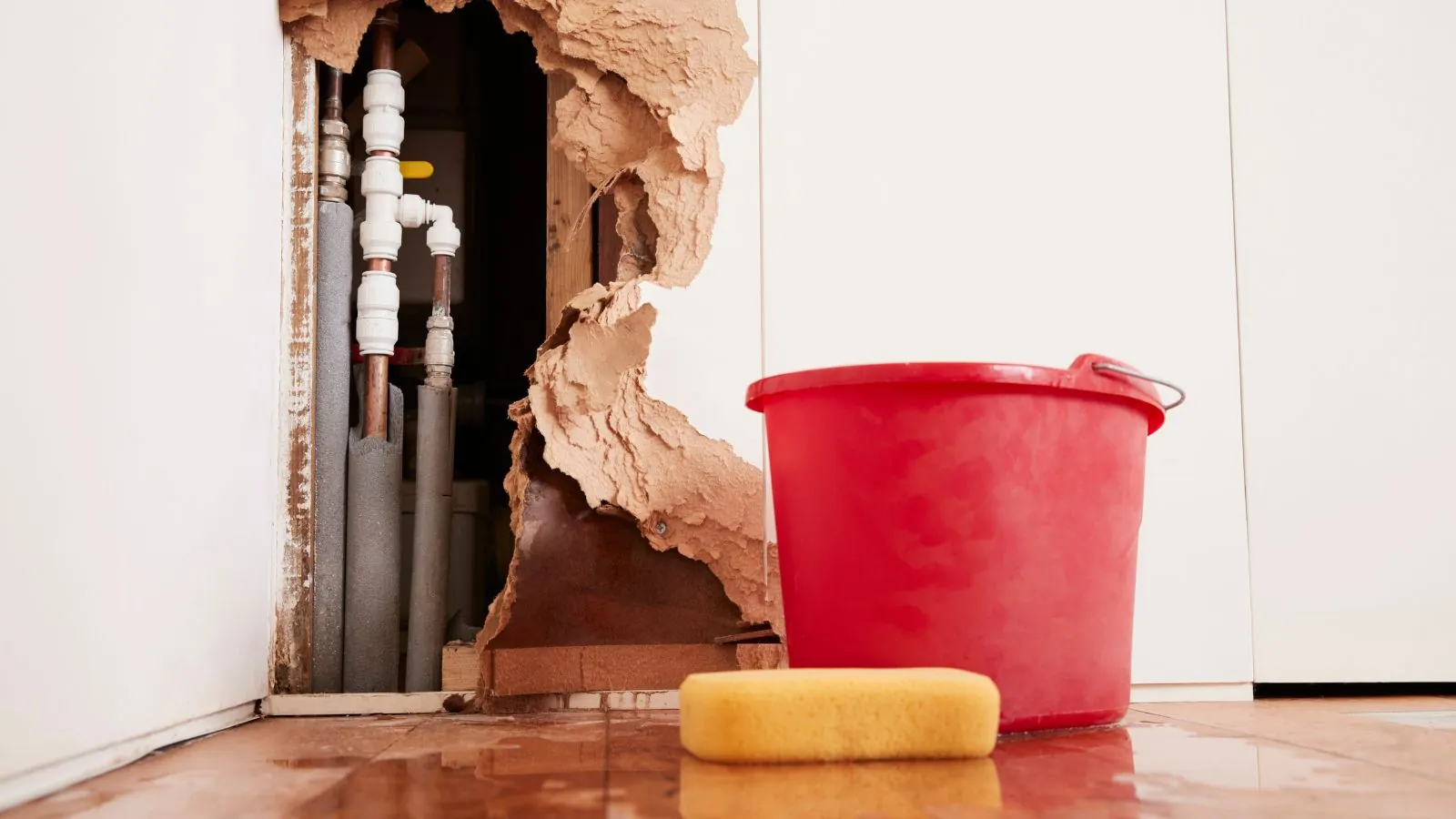
A burst pipe is an emergency the moment you hear it, and this line is open 24/7 for Parsippany homes and businesses. Close the main water valve first, open a faucet on the lowest floor to drain the line, lift valuables off the floor and keep out of any room where water is reaching outlets.
Burst pipe water damage in Parsippany, NJ starts with pressure. A supply line runs under constant pressure, so a split in the pipe keeps pushing clean water into walls and ceilings until someone closes a valve. Cleanup means finding where the water went, removing it and drying every layer it touched.
Burst pipe: what to do in the first ten minutes
Close the main
Find the main shutoff where the water line enters the house, often in a basement, utility room or garage, and turn it fully off.
Drain the line
Open a faucet on the lowest floor and flush toilets once so the pipes empty and stop feeding the leak.
Check power
If water is near outlets or the panel, stay out. Cut power only if you can reach the panel on dry ground.
Call two people
Call a licensed plumber for the pipe and this line for extraction and drying. The two jobs can run side by side.
Where Parsippany homeowners find the main valve
Burst pipe? Get the water out today
Close the main valve, then call. Crews can extract and start drying while the plumber handles the pipe.
Most homes have the main valve near the water meter or where the line enters through the foundation. Parsippany-Troy Hills water is delivered by the township's own Water Department, and the township code treats the house service pipe as the run from the curb stop to the dwelling. A break in that run is on the property side of the curb stop.
If you cannot close the interior valve, the township Water Department can be reached for the curb stop. Do not wait for that if the interior valve works. Closing it takes one turn and saves hours of flooding.
What water from a burst pipe does inside a wall
Water from a supply line is clean when it leaves the pipe, which is Category 1. It does not stay that way. After a day or two on carpet, insulation and framing, it picks up contaminants and is treated as a higher category, which changes what can be saved.
Water follows gravity and the path of least resistance. A split in an upstairs wall soaks the cavity, runs down the studs, drips through the ceiling below and spreads under flooring. Moisture mapping with a meter and a thermal camera shows where it went, so crews do not tear out dry walls.
Sounds and pressure
Hissing in a wall, a running meter with everything off or a sudden drop in water pressure.
Stains and bubbles
Brown rings on a ceiling, paint that bubbles or drywall that feels cool and soft.
Floors that change
Cupped boards, soft spots or a floor that feels spongy over a pipe run.
Smell
A damp, earthy odor in a closet or utility room that was dry last week.
Restoration after the plumber fixes the pipe
The plumber stops the leak. Restoration removes what the leak left behind. Crews extract standing water, pull soaked carpet pad and wet insulation, and cut drywall only as high as the moisture reads. Air movers and LGR dehumidifiers then run, often for three to five days, with readings each visit.
Pipes in kitchens and baths often run behind cabinets, so a burst line may damage kitchen cabinets or wall and drywall at the same time. Crews coordinate the demolition so a plumber can reach the pipe.
Choosing between repair and replacement of wet materials
| Material | Often dried in place when | Often removed when |
|---|---|---|
| Drywall. | Wet for a short time and clean water. | Soft, crumbling or wet past a day or two. |
| Insulation. | Rigid foam board. | Fiberglass or cellulose that stays wet. |
| Carpet pad. | Rarely saved. | Almost always removed. |
| Hardwood. | Caught early with drying mats. | Cupped, buckled or black at the seams. |
| Cabinet boxes. | Surface wet only. | Particleboard swelling at the base. |
The ANSI/IICRC S500 standard, which guides professional water damage restoration, treats clean supply water as Category 1 but warns that it can degrade. That is why the first day matters so much for what can be dried in place.
What a burst pipe cleanup costs
No honest number exists until the water category, the square footage and the materials are known. These are the factors that set the price, and scope and price should be explained before work starts.
Time before shutoff
More minutes of flow means more water, more rooms and more material to remove.
Floors affected
Water that reaches a second floor or a finished basement multiplies the work.
Materials
Drywall, insulation, carpet pad and flooring each add removal and drying work.
Drying days
The number of equipment days follows the moisture readings, not a fixed schedule.
Rebuild scope
Replacing drywall, paint and flooring is a separate line from mitigation.
Sudden pipe failure is often a covered loss under homeowners insurance, while gradual leaks usually are not. Check your policy, report the loss promptly and ask your insurer what documentation it wants. For a burst line in a nearby town, crews also serve Boonton and Mountain Lakes.
Burst pipe questions in Parsippany
Yes. The line is open 24/7. Pipes often fail in the middle of the night or on cold mornings, so after-hours dispatch is part of the service.
Close the main valve, then call both. The plumber repairs the pipe and the restoration crew extracts water and dries the structure, and the two can work at the same time.
A split in a supply line can release hundreds of gallons in an hour, depending on pressure and the size of the break.
It starts clean, but the longer it sits in materials the more it is treated like contaminated water. Fast removal keeps more of the building salvageable.
Often, when the loss is sudden and accidental. Policies differ, so check yours and ask your insurer about your deductible and what documents to send.
Many jobs need three to five days of drying, but readings decide. The crew checks moisture each visit and removes equipment when the building reads dry.