
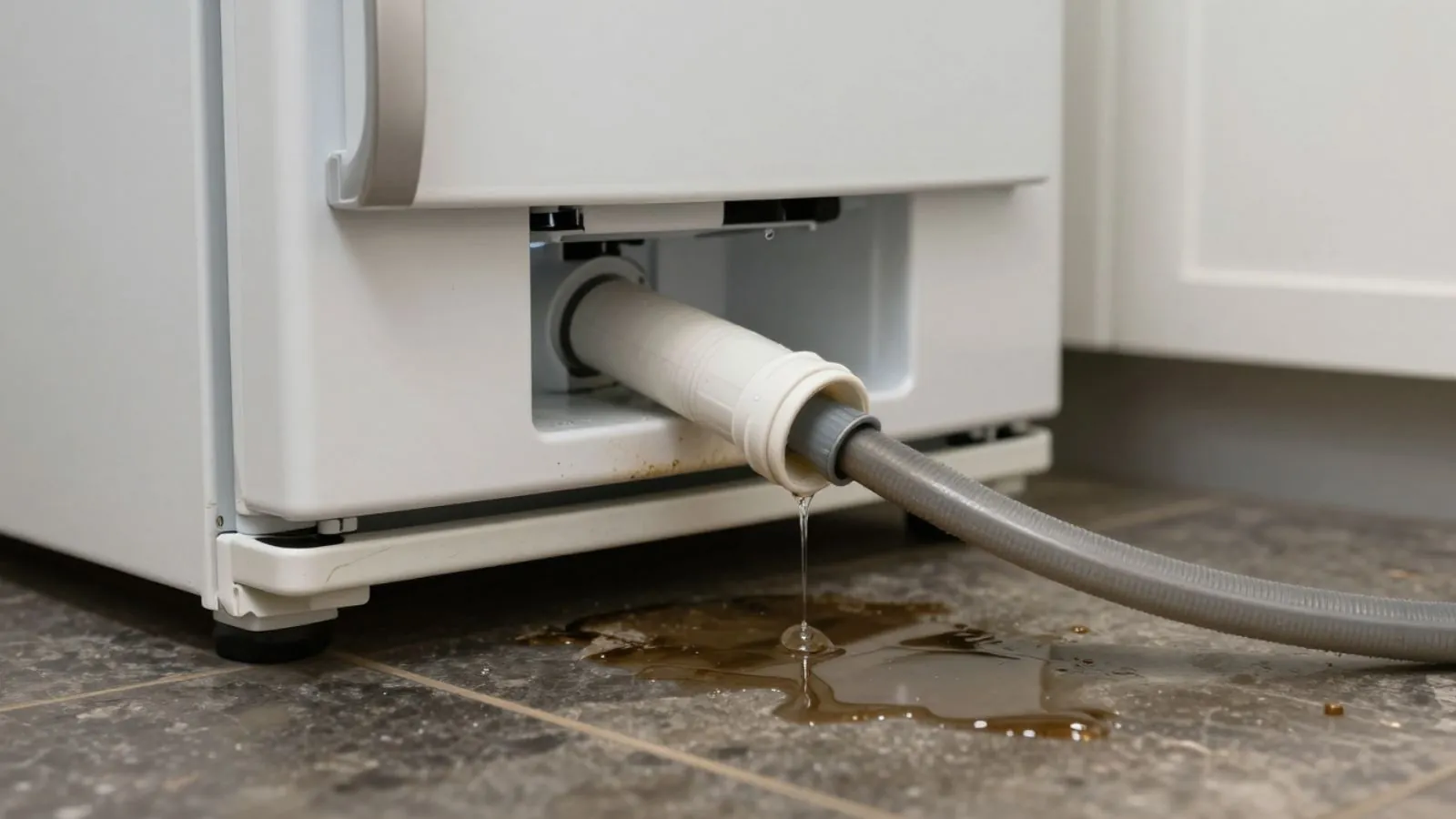
A leaking appliance is an emergency when water is spreading, and this line is open 24/7 for Parsippany. Unplug the appliance if the floor around it is dry, close the shutoff valve behind it or the main water valve, and keep out of water that reaches outlets.
Appliance leak water damage in Parsippany, NJ usually comes from supply hoses, drain lines or a failed inlet valve. The leak may run for hours before anyone notices, so cleanup covers more than the visible puddle. Crews trace water under flooring, behind cabinets and into the ceiling below.
Where appliance leaks come from
| Appliance | Common failure | Where the water goes |
|---|---|---|
| Washing machine. | Burst or loose supply hose, clogged drain. | Floor, subfloor and the ceiling below. |
| Dishwasher. | Door seal, inlet valve or drain hose. | Under the cabinet toe kick and kitchen floor. |
| Refrigerator. | Ice-maker line or defrost drain. | Under the unit and behind cabinets. |
| Water softener. | Brine line or tank fitting. | Utility room floor and slab. |
| Sump or utility sink. | Discharge line or overflow. | Basement floor and stored items. |
Appliance leak emergency: stop the water, then protect the floor
Appliance flooding the floor? Call now
Close the valve, then call. The crew can extract and dry while you arrange the appliance repair.
Close the valve
Use the shutoff behind the washer or under the sink. If it sticks, close the main water valve.
Unplug only if dry
Pull the plug only when the floor near the outlet is dry. Otherwise, leave it and cut power at the panel from a dry spot.
Lift belongings
Raise rugs, boxes and small furniture. Remove loose items from the cabinet base.
Document the damage
Photograph the appliance, the source and the wet area, and note the make and model.
Why a small leak becomes a big job
Appliance leaks are often slow. A hose seeps for days, and the water wicks into the cabinet base, the subfloor and the framing. By the time a stain shows on the ceiling below, the moisture has already spread through layers you cannot see.
Washing machines on an upper floor are the classic problem. A hose can release a steady flow and soak the bathroom or laundry subfloor, then drip through the ceiling. If a ceiling shows a stain, see the ceiling water damage page.
What crews do after the water stops
Crews extract standing water and check around the appliance with a moisture meter. Toe kick panels are pulled so cabinet bases can dry, and flooring is lifted if water has gone underneath. Sheet vinyl and laminate often trap moisture, so they come up before drying begins.
Dehumidifiers and air movers run until readings return to normal, and the crew follows the structural drying approach for walls and subfloors. A kitchen leak can reach cabinets, so the kitchen water damage page covers those details.
Prevention that works
Braided hoses
Replace rubber supply hoses with braided stainless lines and check them yearly.
Overflow pans
Place a drain pan with a leak sensor under the washer and water heater.
Shutoff habit
Close the washer valves when you leave for a long trip.
Check behind appliances
Pull the fridge and dishwasher out once a year and look for damp or stains.
Professional drying follows ANSI/IICRC S500, the standard that defines water categories and drying goals. Discharge from a washer or dishwasher generally falls in Category 2 under that standard, which is why cleaning comes before drying.
What to do before the crew arrives
- Close the valve behind the appliance or the main water valve.
- Do not touch cords or outlets near the water.
- Do not pull a heavy appliance across a wet floor.
- Photograph the leak, the model label and the wet area.
What an appliance leak cleanup costs
Price follows the damage, not the appliance. Scope and price should be explained before work starts, and these factors drive it.
Run time
A leak found in an hour is a smaller job than one that ran for a weekend.
Floor type
Tile, vinyl, laminate and hardwood each dry differently.
Cabinets
Particleboard bases swell and are often replaced.
Floors below
A leak that reaches a ceiling adds drywall work.
Drying time
Equipment days follow moisture readings.
Sudden appliance leaks are often covered, while a leak that went unnoticed for a long time can be excluded. Photograph everything and tell your insurer quickly. Crews also work in Boonton and the other towns around Parsippany.
Appliance leak questions in Parsippany
Yes. The line is open 24/7. Dishwashers and washers often fail while no one is watching, and after-hours dispatch is available.
Not if the floor is wet or the appliance is heavy. Close the valve and wait for help so you do not slip or strain.
Yes. Water reaches the subfloor and joists and then drips through the ceiling below.
Document the damage and tell your landlord or association. The crew can start drying now and keep records for the claim.
Supply water starts clean. Drain water from a washer or dishwasher is dirtier and is handled with more care.
Often if sudden. Gradual leaks are commonly excluded, so check your policy and ask your insurer.