
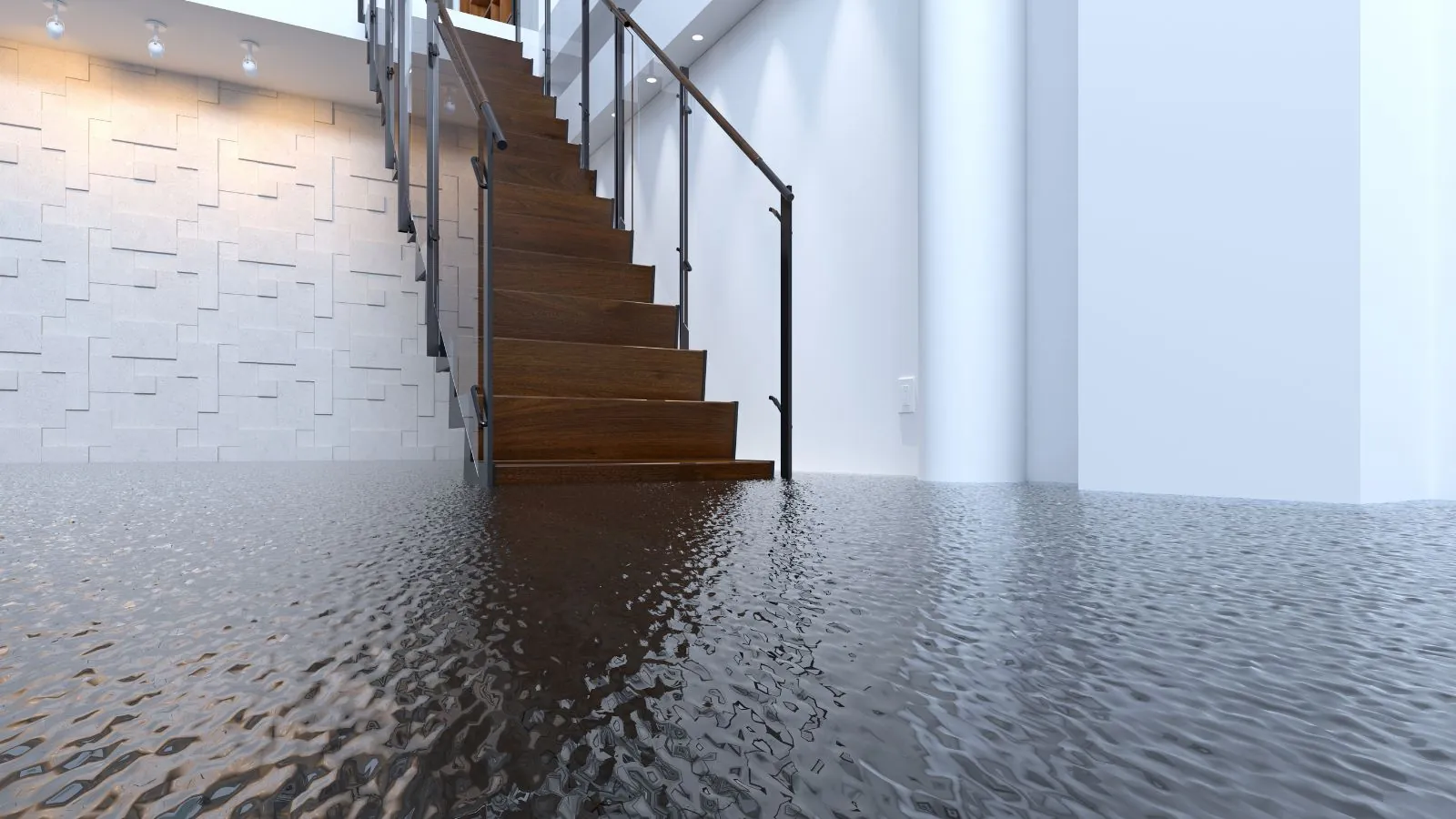
Water in a basement is an emergency, and this line is open 24/7 for Parsippany. Stay out of rising water, never touch outlets or the panel while wet, and call 911 for gas or electrical danger. If it is safe, shut off the main water valve and lift belongings off the floor.
Basement water damage cleanup in Parsippany, NJ handles water from pipes, appliances, sump failures, drain backups and groundwater. The work depends on the source and the finish: concrete and block dry differently from paneled walls, carpet and drywall.
Where basement water comes from
| Source | Clue | Next step |
|---|---|---|
| Plumbing or appliance. | Water near a pipe or heater. | Shut the valve, see water heater cleanup. |
| Sump pump failure. | Pit full, pump silent. | Restore power or replace the pump. |
| Groundwater seepage. | Wet floor-wall joint after rain. | Pump, dry and improve drainage. |
| Storm runoff. | Water at window wells or stairs. | Pump and clear drainage. |
| Drain or sewer backup. | Water from a floor drain. | Treat as contaminated, see sewage backup cleanup. |
Basement flooding emergency: safety and first steps
Wet basement? Call 24/7
Crews can pump, remove wet materials and dry the space.
Stay out of deep water
Water in a basement can hide electrical hazards, and deep water can make stairs slick.
Stop the source
Close the main valve if a pipe or appliance is leaking.
Lift belongings
Move boxes and electronics to higher ground if it is safe.
Call for pumping
The 24/7 line starts extraction and sets a plan for drying.
Parsippany basements and the water table
Parsippany-Troy Hills sits among the Rockaway and Whippany river systems and the wide Troy Meadows marsh. Lower areas near rivers and lakes can see groundwater rise after long rain. The Lake Hiawatha area flooded in August 2011, and the township later studied the problem.
Check the FEMA flood map for your address and ask the township building department about flood hazard rules before you finish a basement. A sump pump with a battery backup is a practical safeguard, and the water extraction page explains how crews pump deep water.
Finished versus unfinished basements
An unfinished basement with a concrete floor dries fairly fast once the water is out. A finished basement has carpet, drywall, insulation and furniture, and each can hold water. Crews remove wet drywall a little above the water line, lift carpet and pad and dry the studs.
Concrete walls and floors hold moisture for a long time, so readings guide the process. See structural drying for how crews decide when a wall is ready to close. Stored boxes and soft items that sat in water for more than a day are often discarded.
What basement cleanup costs
Costs depend on depth, finish level and water type. Scope and price should be explained before work starts, and these factors drive it.
Water type
Clean, gray or black water set the level of removal.
Depth and area
More water and more floor mean more pumping and drying.
Finish level
Drywall, carpet and built-ins add removal and rebuild.
Contents
Moving and storing belongings is a separate line.
Source repair
Sump, drainage or plumbing repair is a separate trade.
Standard homeowners insurance usually excludes flood and groundwater but may cover a sudden pipe or appliance failure. Sewer backup often needs an endorsement. Ask your insurer which applies. Crews also serve Boonton basements near the Rockaway.
Basement water damage questions in Parsippany
Yes. The line is open 24/7. Basements often flood in heavy rain overnight, and after-hours dispatch is available.
Not if the water is deep or near electricity. A crew has the right pumps and can work safely.
Right away. Mold can start in 24 to 48 hours on wet materials.
Often, if clean water is removed and the structure dried quickly. Contaminated water means more removal.
Standard policies exclude flood. Sudden pipe failures may be covered, and sewer backup needs an endorsement. Ask your insurer.
Maintain the sump pump, add a battery backup, clear gutters and grade soil away from the foundation.