
Walls feel cool, the smell lingers or fans have run for days?
A wall that feels cool or damp to the touch, paint that keeps bubbling, a musty smell that returns after cleaning and baseboards that stay stained all suggest moisture is still in the structure. Fans alone seldom fix this.
Consumer fans move air across a surface, but they do not remove the water vapor from the room. Without a dehumidifier and readings, a wet wall can stay wet for weeks. A professional drying plan targets the moisture inside the materials.
Structural drying removes moisture that has soaked into framing, subfloor, drywall and concrete after the visible water is gone. A room can look dry while the studs behind it stay wet, and that hidden moisture is what causes mold, warped floors and lingering odors.
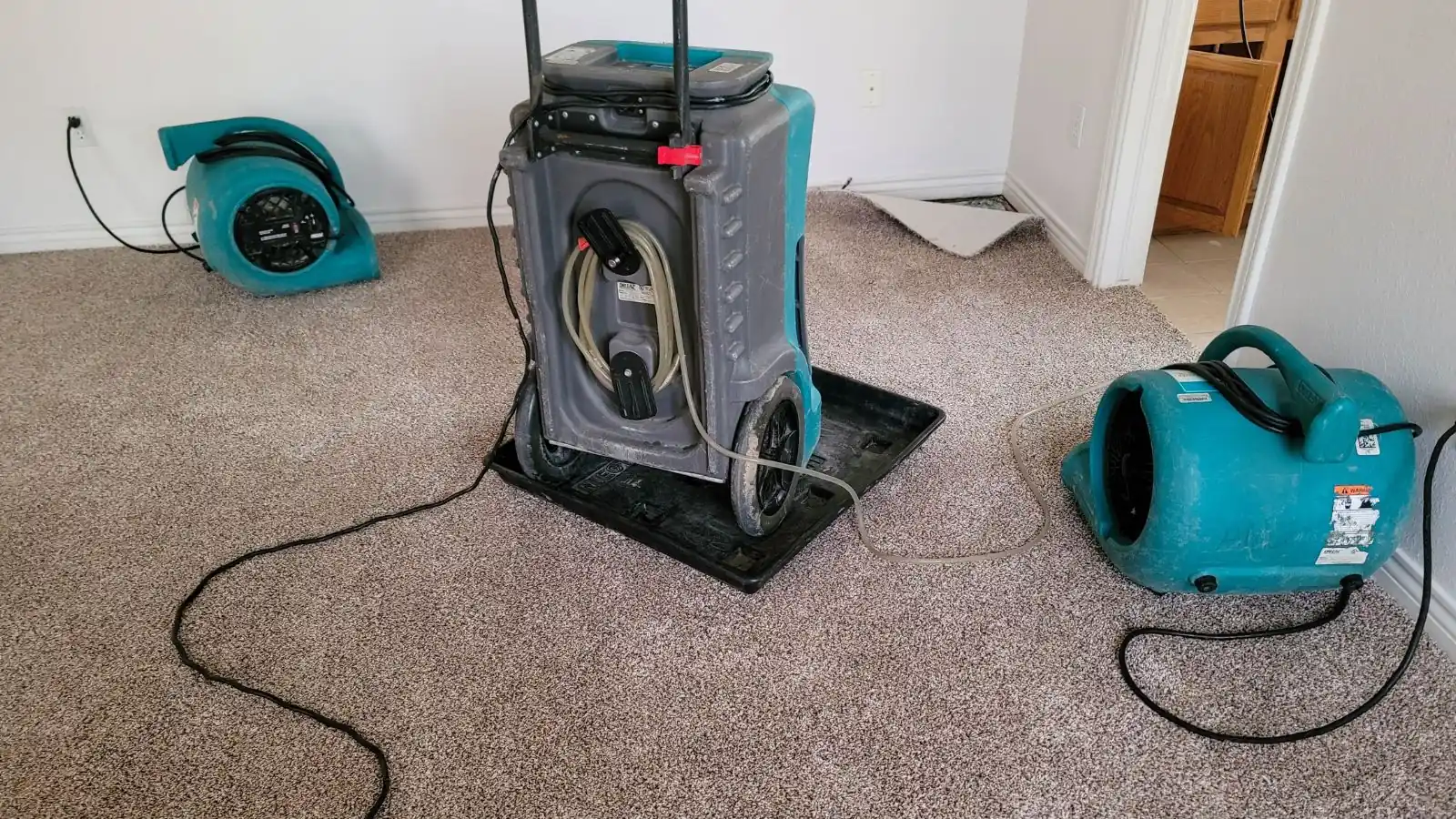
Structural drying and dehumidification in Parsippany, NJ uses air movers, low-grain refrigerant dehumidifiers and meters to bring materials back to their normal moisture level. The crew records readings each visit so the drying ends on data, not on a calendar.
How structural drying works
Drying relies on three things working together: air movement across wet surfaces, dehumidification to pull vapor out of the air, and enough heat to speed evaporation. If any one is missing, drying slows or stalls.
Air movers push dry air across wet materials so moisture leaves the surface. Dehumidifiers collect that vapor and remove it from the building. A closed room works best, so doors and windows stay shut and the crew measures the humidity in the air as well as the moisture in the wood.
The tools and what each one does
Walls still damp? Call to book drying
A crew can map moisture, set equipment and track readings until the building is dry.
| Tool | What it does | When it is used |
|---|---|---|
| Moisture meter. | Reads moisture in drywall, wood and concrete. | At the start and every visit. |
| Thermal camera. | Shows cool wet areas behind surfaces. | To find hidden moisture. |
| Air movers. | Move air across wet materials. | Floors, walls and cavities. |
| LGR dehumidifier. | Removes vapor from the air. | Whole affected area. |
| Injectidry or wall-cavity drying. | Pushes air through wall cavities. | Walls that cannot be opened. |
What a drying day looks like
Map the moisture
The crew reads every wall, floor and ceiling in the affected zone and marks the wet edges.
Set equipment
Air movers and dehumidifiers go where the readings point. Equipment count follows the room volume and the wet area.
Check daily
The crew returns, records readings and moves equipment as the wet area shrinks.
Confirm dry
Equipment comes out only when readings match the dry standard for each material.
How long drying takes
Many jobs take three to five days, but concrete, thick framing and hardwood can take longer. Wet insulation or a second layer of flooring slows things down. EPA guidance says to dry wet materials within 24 to 48 hours to limit mold, so the sooner equipment starts, the better.
Drying also follows the water category. Clean water allows more materials to stay. Contaminated water, covered in the sewage cleanup page, means more removal before drying starts. See also the guidance on flood cleanup after storms.
Why readings matter more than days
Setting equipment for a fixed number of days is a guess. Two houses with the same leak can dry at very different speeds depending on humidity, materials and airflow. A reading-based plan tells both of you when to stop, and it gives your insurer a record.
What to do and what not to do while the building dries
- Do not turn off the equipment or move it without asking.
- Do keep doors and windows closed in the drying area.
- Do keep cords, children and pets apart.
- Do tell the crew about any new smell, stain or sound.
What structural drying costs
Price follows the size of the wet area and the time it takes. Scope and price should be explained before work starts, and these factors set it.
Affected area
More wet square footage means more equipment.
Materials
Concrete, hardwood and thick framing dry slowly.
Equipment days
The number of days follows the readings.
Access
Walls that can be opened dry faster than those that cannot.
Season
High summer humidity slows drying and may add dehumidifiers.
Insurers often ask for drying logs and readings, so keep the crew's records. Water from a sudden event is commonly covered, while gradual damage may not be. The same drying approach is used in Morris Plains and the other nearby towns.
Structural drying questions in Parsippany
The water likely soaked into the drywall and studs. Surface cleaning does not remove moisture inside the wall, so drying equipment and readings are needed.
For a tiny damp spot, maybe. For a real water event, a household dehumidifier is too small and fans miss moisture inside walls.
Air movers and dehumidifiers make steady noise for several days. Crews place them to keep the space usable where they can.
Yes, because the equipment runs continuously for days. Keep the crew's equipment log for your insurer.
The crew measures each material against its dry standard and records the numbers. When they match, the equipment comes out.
It greatly lowers the risk when it starts within 24 to 48 hours, but it does not remove mold that has already grown.