
Filing a water damage claim is a process, and the order matters. What you do in the first hours can protect your coverage, or quietly weaken it.
The steps below follow the common order: make it safe, document, notify, mitigate, meet the adjuster and keep records. Policies differ, so treat this as a checklist to compare with your own paperwork.
Step one: make it safe and stop the water
Safety comes before paperwork. Close the water source, keep out of water near outlets and call 911 for gas or electrical danger. If a pipe broke, close the main valve and open a faucet at the lowest level to drain the line.
Policies usually expect you to take reasonable steps to prevent further damage. That means stopping the water and calling for extraction rather than waiting for an adjuster. The water extraction page explains what crews do first.
Step two: document before you clean
Photograph and video the source, the water line on the walls, damaged flooring, furniture and belongings. Take wide shots and close-ups, and add a short narration if you can. Note the date, the time and what you saw.
Make a list of damaged items with approximate age and value. Keep the failed part, such as a split hose or a broken fitting, since the adjuster may want to see it.
Step three: notify the insurer
Call or use the app
Report the loss and ask for a claim number.
Ask what is needed
Request a list of documents and the deadline for each.
Ask about mitigation
Confirm that emergency drying and extraction are covered.
Write it down
Note the name, date and time of each conversation.
Step four: mitigate and keep the readings
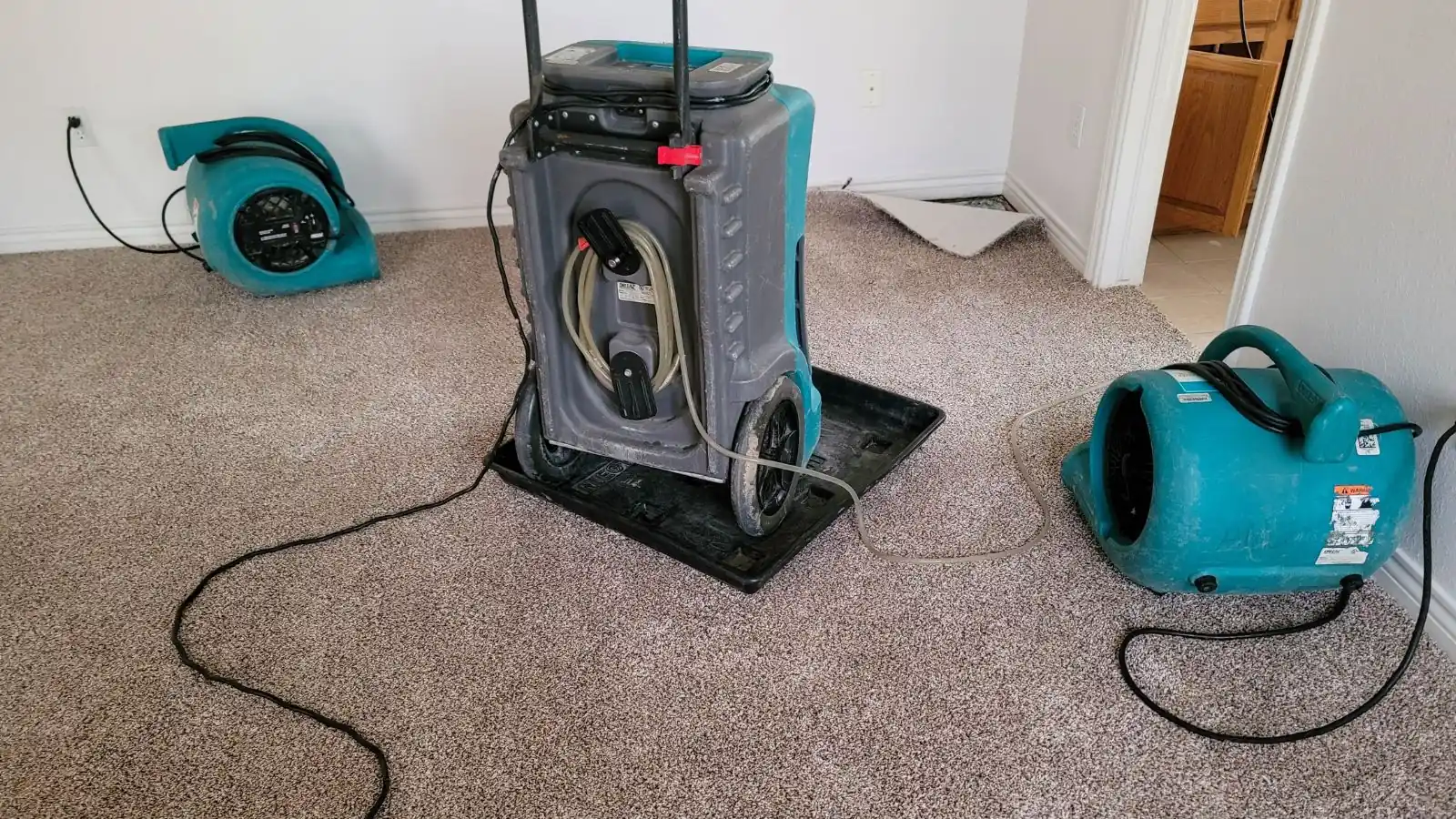
Drying is part of protecting the property. Crews record moisture readings, equipment placement and daily logs. Ask for copies. Those records show the insurer what was wet, what dried and what had to be removed.
Do not throw away wet materials until the adjuster has seen them or you have photographed them thoroughly. The structural drying page explains how crews decide when the building is dry.
| Document | Why it helps | Who has it |
|---|---|---|
| Photos and video. | Show the condition before cleanup. | You. |
| Moisture logs. | Show what was wet and when it dried. | Restoration crew. |
| Written scope. | Lists what work is planned. | Restoration crew. |
| Receipts. | Support reimbursement for emergency costs. | You. |
| Claim notes. | Track every conversation. | You. |
Step five: meet the adjuster
The adjuster inspects the damage and writes an estimate. Walk them through the source and the affected rooms, and share your photos and the crew's scope. If their estimate misses items, ask in writing what was excluded and why.
You are not required to use the contractor your insurer recommends, according to the New Jersey Department of Banking and Insurance. If you disagree with an estimate, ask for the reasoning and bring your documents.
Step six: keep the paper trail
Save every email, estimate, invoice and payment record. If the claim runs long, a dated log of calls helps you stay organized. The state department can help with disputes if you reach an impasse, and it publishes information on filing a complaint.
What an adjuster looks for
An adjuster is trying to answer three questions: what caused the water, how far did it spread and what does it cost to put right. Clear photos, a clean timeline and a written scope answer all three quickly. Gaps lead to follow-up visits and delays.
Show the adjuster the failed part, the water line and any places where water traveled, such as the ceiling below or the wall behind a cabinet. If a crew opened a wall, show the photos of the wet framing before it was dried.
Ask the adjuster to explain the estimate line by line. If an item you expected is missing, ask whether it was excluded, deferred or overlooked. Request the answer in writing.
Mistakes that weaken a claim
- Waiting days to report the loss or to stop the water.
- Throwing away wet materials before photographing them.
- Signing a document you have not read, especially one that assigns your benefits.
- Letting the repair scope grow without written approval from the insurer.
- Losing track of who said what and when.
None of these mistakes is rare, and most are easy to avoid with a notebook and a phone camera. Treat the claim like a small project with a folder, a log and a checklist.
Emergency costs and reimbursement
Emergency services such as water extraction, a temporary tarp or boarding up an opening are normally treated as part of preventing further damage. Ask your insurer whether they reimburse these costs and what receipts they need.
Keep invoices that show the date, the work and the equipment used. A restoration crew's daily log and moisture readings also support the cost, because they show the water was real and the drying was needed.
Keep a copy of every estimate, even ones you reject, since comparing them can show what an adjuster missed.
A final tip is to read the policy before you need it. Knowing the deductible, the reporting window and the mitigation language makes the first hour of a loss much calmer.
Local notes for Morris County claims
In Morris County, a heavy storm can create many claims at once, and adjusters get busy. Acting early with photos and a written scope helps you stay in the queue with complete paperwork.
Homeowners in Mountain Lakes and Morris Plains can use the same checklist, whether the loss is a pipe, an appliance or storm water.
Questions about this topic
Start emergency steps such as stopping the water and extracting standing water. Photograph everything first and keep damaged items the adjuster may want to see.
Then a claim may not pay anything. Get a scope first, then decide with your agent whether to file.
Yes. New Jersey does not require you to use the contractor your insurer recommends.
It varies with the size of the loss, the insurer's workload and how complete your documents are. Ask for a timeline when you file.
Call the township Water Department at (973) 263-7099 for the street side. Tell your insurer too, and keep photos of the damage inside the house.