
In northern New Jersey, the cause of water damage changes with the weather. A call in January usually involves a frozen pipe, while a call in August is more likely an AC drain or a storm leak.
This guide goes season by season. Use it as a short list of what to check, when to check it and what to do if something goes wrong.
Winter: frozen and split pipes
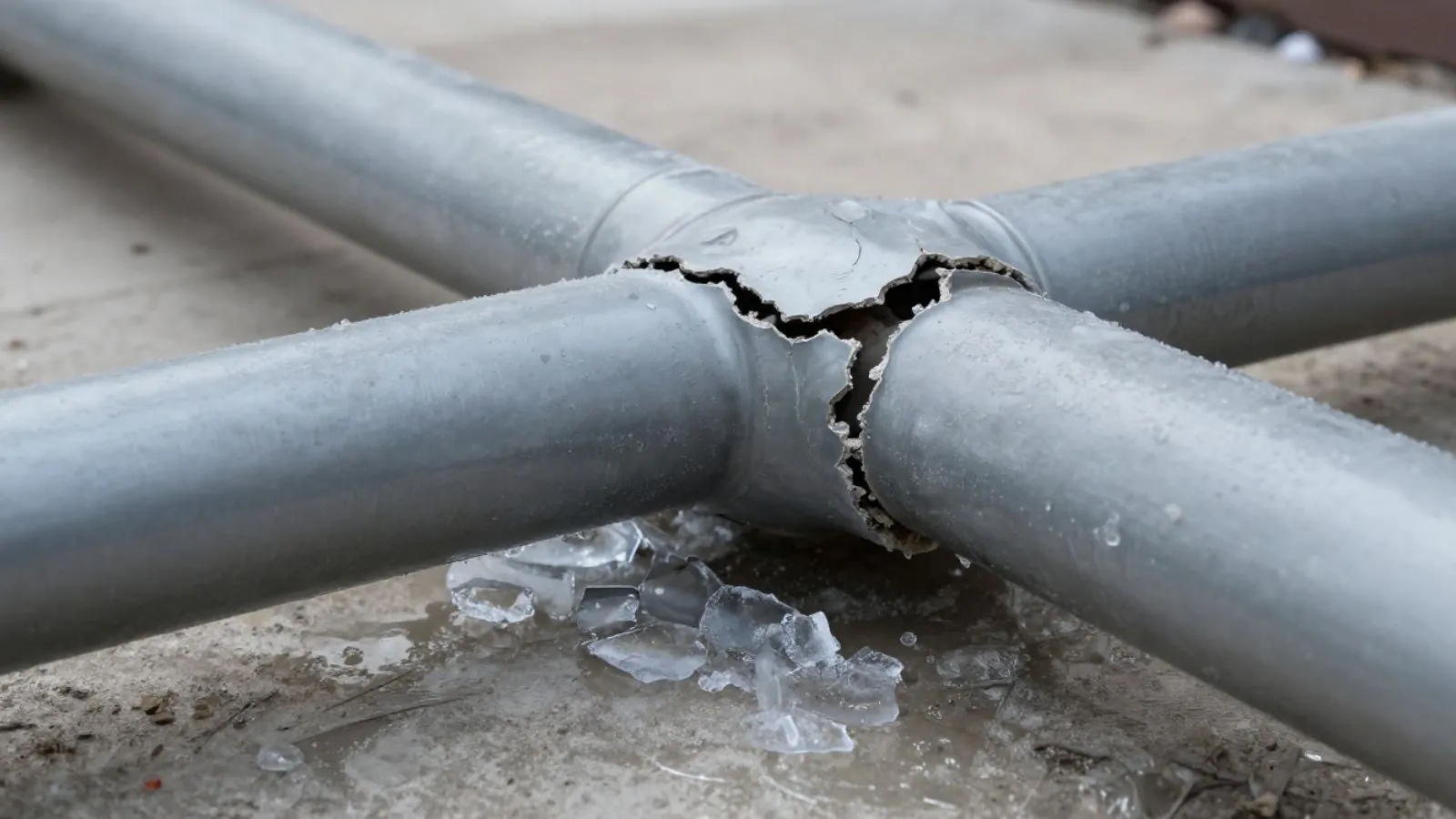
Pipes in exterior walls, garages, attics and crawl spaces are the most exposed. Water expands as it freezes, the pipe splits and the flood begins when the ice melts. Many homeowners discover the damage only after a warm-up.
During a cold snap, open cabinet doors under sinks, let a faucet drip and keep the thermostat steady. Disconnect hoses and shut the interior valve to outdoor spigots. The frozen pipe page covers cleanup if a pipe does split.
Spring: storms, runoff and snowmelt
Spring brings heavy rain and melting snow that test every drainage path around the house. Basement seepage, window well overflows and sump pump failures are the usual causes of spring water calls.
Check gutters after winter, clear window wells and test the sump pump. Look for stains on basement walls and on the ceilings below any roof area where ice built up.
| Season | Typical problem | What to check |
|---|---|---|
| Winter. | Frozen and split pipes. | Exterior wall pipes, garages, hose bibs. |
| Spring. | Runoff and basement seepage. | Sump pump, window wells, gutters. |
| Summer. | AC condensate overflow. | Drain line and pan, humidity. |
| Fall. | Clogged gutters and roof leaks. | Gutters, flashing, downspouts. |
Summer: air conditioners and humidity
A cooling system pulls water out of humid air, and a clogged drain line sends that water into the ceiling or the closet. Summer storms also drive rain through weak seals and flashing.
Check that the condensate line drains freely and that the pan is dry. High humidity can also keep wet materials from drying, so running a dehumidifier in the basement helps. The AC leak page explains the problem in detail.
Fall: leaves, gutters and the first storms
Leaves clog gutters and downspouts, and the first big fall storm is when they fail. Water pours over the edge, runs down the wall and finds the basement. Fall is also the season for checking roof flashing and chimney caps before winter.
A fall cleanup of gutters, a test of the sump pump and a look at exterior caulk are a small price compared with a flooded basement.
Year-round habits that pay off
- Know where the main water shutoff is and make sure it turns.
- Replace rubber washer hoses with braided stainless lines.
- Check under sinks and behind appliances every few months.
- Watch your water bill for unexplained jumps.
- Keep photos of your home and belongings for insurance.
None of these habits take long. Together they catch most small leaks before they turn into restoration projects.
A simple yearly calendar
| When | Task | Time needed |
|---|---|---|
| Early fall. | Clean gutters, check roof flashing, test the sump pump. | A weekend morning. |
| Before the first freeze. | Disconnect hoses, insulate exposed pipes, locate the main. | An hour. |
| Late winter. | Check attic and ceilings for ice dam stains. | Twenty minutes. |
| Spring. | Clear window wells, check grade and basement seams. | An hour. |
| Early summer. | Flush the AC condensate line and check the pan. | Thirty minutes. |
What to do when a season catches you out
Even careful homeowners get surprised. A pipe freezes in an unexpected cold snap, or a storm hits harder than forecast. The response is the same in every season: stop the source, keep clear of electricity, photograph the damage and call for help.
The faster water leaves the structure, the less it spreads. Each season has its own pattern, but the first hour looks alike, and the steps are in the frozen pipe guide for winter and the AC leak guide for summer.
Why small checks beat big repairs
Most water damage claims start with a small, ignored problem. A drip under a sink, a gutter that overflowed twice or a stain that appeared after the last storm all signal something that will grow.
A short seasonal routine finds those problems while they are cheap to fix. It also gives you a baseline, so you notice when something changes. Take photos of the basement and attic each year and compare them.
Where seasonal risks overlap
Some risks cross seasons. A roof leak that starts in a fall storm may not show as a stain until a winter thaw. A pipe weakened by a freeze may not fail until spring pressure rises. Treat a surprise stain in any season as a reason to check the whole chain.
Humidity is the common thread. Wet materials dry slowly in muggy weather and fast in dry winter air, which changes how long damage lingers. A dehumidifier in the basement through summer is a cheap hedge.
Crews that follow ANSI/IICRC S500 note that clean water degrades the longer it sits, so seasonal checks catch leaks while the water is still Category 1.
If you are new to the area, ask neighbors what they see each season. Local habits matter, such as which streets collect runoff and which houses lose power early in storms. Combine that with the calendar above and you will have a good map of your own risks. Update it each year as you learn more about the house.
Weather patterns around the Rockaway and Whippany
The rivers that run through Parsippany-Troy Hills mean that spring and fall storms can matter more than the average rainfall suggests. The Lake Hiawatha area flooded in August 2011, during Hurricane Irene, and the township studied the causes afterward.
In lake and river communities such as Mountain Lakes and Boonton, check drainage in every season, not only after a big storm.
Questions about this topic
Frozen pipes in exterior walls, garages and crawl spaces, which split and flood when they thaw.
Summer, when humidity is high and the system runs for long periods.
Open cabinet doors, let a faucet drip, keep the heat on and insulate exposed pipes.
Saturated ground and runoff push water through seams and window wells, and sump pumps can fail under load.
It varies by year. Winter freezes, spring storms and summer AC leaks each cause calls, so check for the risk that matches the season.