
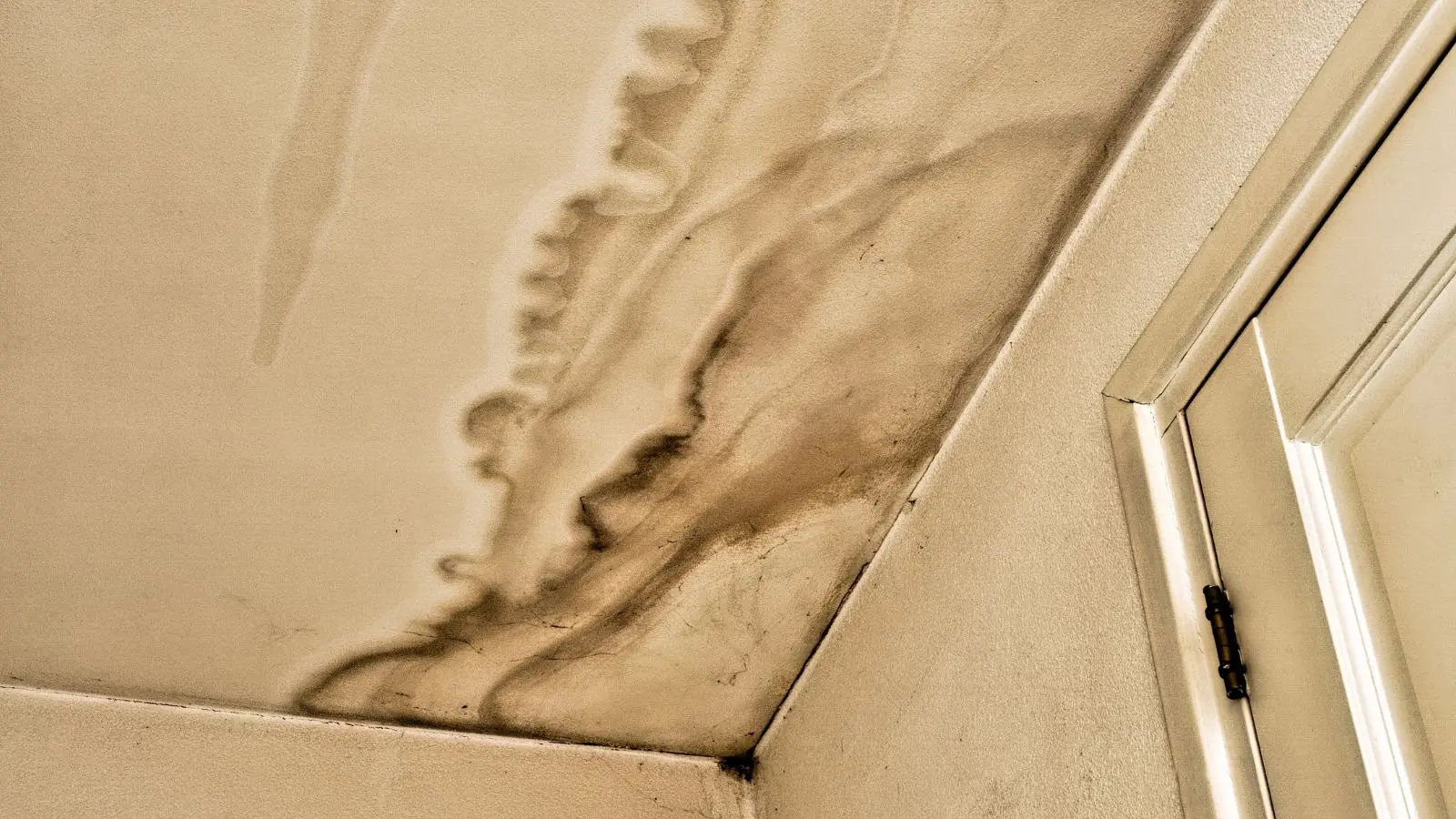
Finding a stain on a ceiling or wall raises one question right away: is it still leaking? An old stain from a repaired leak is a cosmetic issue. A new or active stain is a repair job and a risk.
This guide covers the signs that help you tell the difference, and the readings that settle it when the signs are unclear.
Signs of a new or active leak
Wet or cool to the touch
A damp surface or a cool spot suggests current moisture.
Soft or bulging drywall
Gypsum softens when wet. A bulge means water is trapped.
Dripping or staining that grows
A stain that gets bigger over days is still active.
Fresh paint peeling
Bubbling paint often marks recent moisture behind it.
Signs of old, dry damage
An old stain is often dry, firm and well defined. It may have a darker ring at the edge where the water stopped. The drywall feels solid and the paint is intact.
Old stains can be misleading. A stain can look dry on the surface while a hidden section of the wall is wet. Use readings and not appearance alone.
| Clue | Points to new or active | Points to old or dry |
|---|---|---|
| Touch. | Damp, cool or soft. | Dry and firm. |
| Edge. | Fuzzy, spreading. | Sharp, darker ring. |
| Smell. | Fresh dampness. | Faint or none. |
| Paint. | Bubbling or peeling. | Intact. |
| Over a week. | Gets larger. | Stays the same. |
Mark it and watch it
Trace the edge
Use a pencil to mark the edge of the stain and write the date.
Check after rain or use
Look again after a storm or after the fixture upstairs runs.
Compare
If the stain grows past the line, it is active.
Call for readings
A moisture meter confirms what the eye cannot.
Why readings settle it
A moisture meter shows how much water is in a material, and a thermal camera shows cool, wet areas. If readings are normal, the stain is probably old. If readings are high, there is moisture to track down.
Crews also look for the source. A stain may sit several feet from a leak because water travels along joists and pipes. The ceiling water damage page explains how crews trace it.
What to do about an old stain
If readings are normal and the source was repaired, the stain is cosmetic. Prime with a stain-blocking primer and repaint. If the board is damaged, replace it.
If the stain is part of a past leak that was never fixed, you may still have a problem. Ask for readings, and look for the source before painting.
Why this matters when you sell or file a claim
Documented, dry, repaired damage is a smaller issue than an active leak. Keep records of the repair and the readings. If you are filing a claim, report new damage promptly, since insurers expect timely notice and may treat long-term seepage differently. The wall and drywall page covers how crews repair board.
Tools that settle the question
| Tool | What it shows | Limits |
|---|---|---|
| Pin or pinless moisture meter. | Moisture level in drywall and wood. | Needs readings in several spots. |
| Thermal camera. | Cool, wet areas behind surfaces. | Best with a temperature difference. |
| Visual inspection above. | Source clues in attic or floor above. | Needs safe access. |
| Pencil mark over days. | Whether the stain grows. | Takes time. |
No single tool answers every case. Crews combine them, and they also look for the source above or behind the stain.
If the readings are normal and the stain is not growing, it is likely old. If readings are high, treat it as active, even if the stain looks faded.
A stain that keeps returning
If a stain returns after painting, moisture is still reaching it. Paint cannot hold back water, and the stain shows through. Find the source before repainting.
Check the roof, the bathrooms above, the HVAC drain line and the exterior walls. A leak that comes only with rain is usually roofing or flashing. A leak that comes only when a fixture runs is a plumbing problem.
Documenting damage for later
Take dated photos of any stain, and record readings if you have them. If the damage is old and repaired, keep a copy of the repair record. A clear history helps with insurance, resale and future inspections.
A note on color and shape
Stain color is a weak clue. Brown rings often come from tannins in wood or rust from nails, and they can appear from a single wetting. Several rings in layers suggest repeated wetting over time, which points to a leak that comes and goes.
Shape helps too. A stain with a tidy circle under a fixture suggests a drip from above. A long streak down a wall suggests water running along a framing member. Each shape points to a different place to look.
If you are buying or selling, a clear answer matters. A seller who can show dry readings and a repair record has a stronger story than one who simply painted. A buyer who finds an old stain should ask for the repair history, and request readings during the inspection so the answer rests on data. Crews that follow the ANSI/IICRC S500 standard measure moisture against reference readings, so ask which reference was used.
Stains in older Morris County homes
Morris County has many homes from different eras, and each has its own plumbing and roof history. A stain in an older home may come from a long-fixed leak, or from a current one.
Homeowners in Morris Plains and Mountain Lakes can call for readings to find out which it is.
Questions about this topic
Mark the edge with a pencil and check it over a few days. If it grows or feels damp, it is active.
Only after readings confirm it is dry. Use a stain-blocking primer.
The source may still leak or the board may still be wet. Moisture bleeds through paint.
A dry stain is less of a risk, but if it was wet for a long time, mold may have grown behind it.
A restoration crew with a moisture meter and a thermal camera can read the area and tell you whether it is wet.