
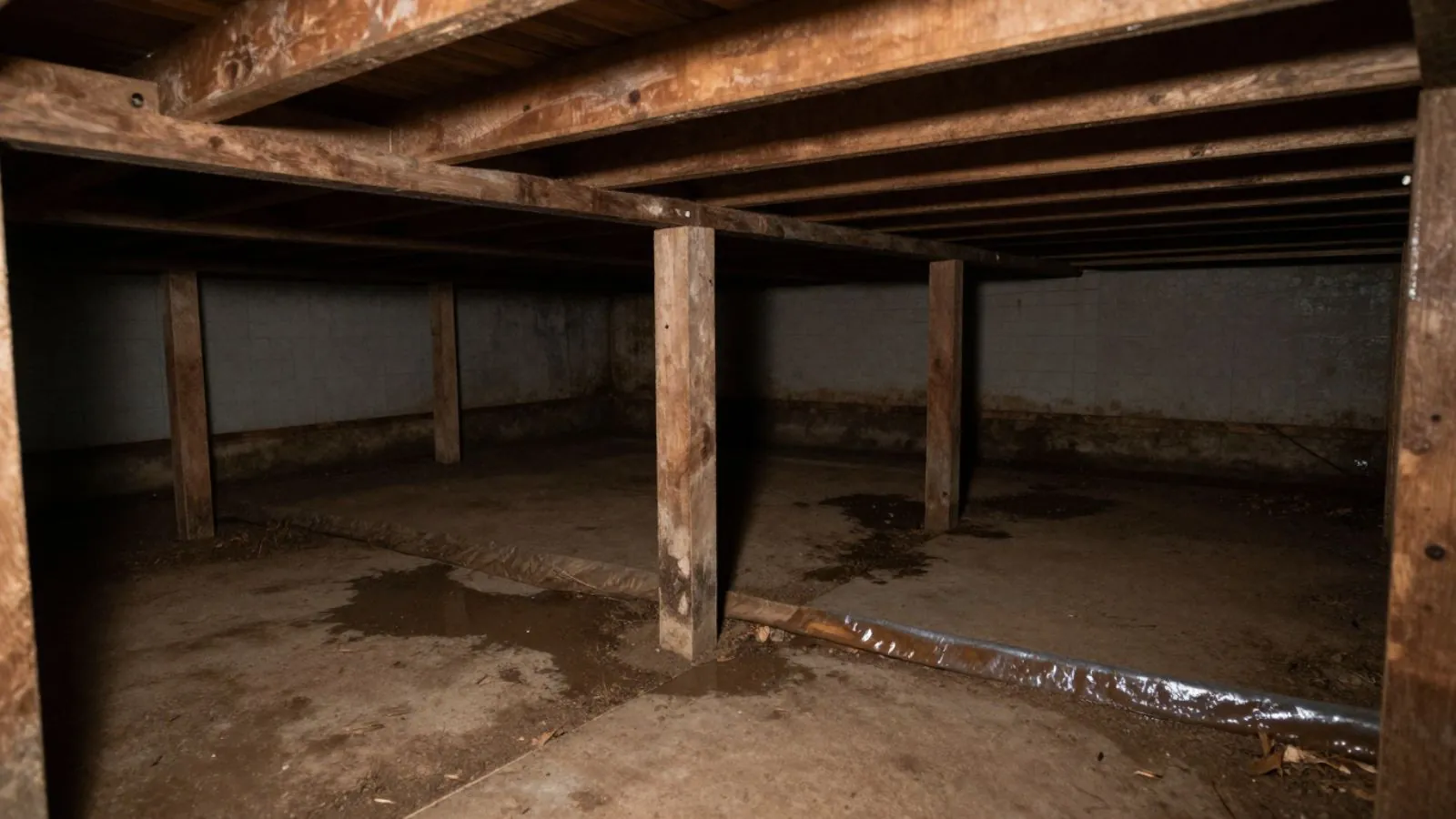
A musty smell after a leak almost always points to moisture that is still in the building. Surface cleaning and air fresheners hide it for a day or two, and then it returns.
The smell comes from microbial growth and damp materials, and it gets stronger when humidity rises. Finding the hidden wet spot is the only lasting fix.
Why the smell comes back
Mold and bacteria produce gases as they grow on damp materials, and those gases carry the musty smell. If a wall, subfloor or carpet pad stays wet, growth continues. EPA guidance says to dry wet materials within 24 to 48 hours to limit mold.
A smell that returns after cleaning usually means the source is behind a surface. Paint, laminate and carpet can seal in moisture, so the room feels dry while the layer underneath is not.
Where to look first
Under the carpet
Pad holds water for a long time and often smells first.
Behind baseboards
Wicking from a past leak can leave the wall base damp.
In the crawl space
Damp soil and wet insulation send odor into the rooms above.
Near the air handler
A clogged condensate line can soak insulation and ducts.
The crawl space page and the AC leak page cover two of the most common hidden sources in homes with a musty smell.
How crews find hidden moisture
A moisture meter reads water inside drywall, wood and concrete. A thermal camera shows cool, wet areas behind surfaces. Together they map the problem without tearing out dry material.
If readings are high, the crew may open a small section of wall or lift a corner of carpet to confirm. This is faster and cheaper than guessing, and it gives you a record for the insurer.
| Finding | Typical response | Result |
|---|---|---|
| Wet pad under dry-looking carpet. | Remove pad, dry the floor. | Odor fades as moisture drops. |
| Damp wall base. | Open the base, dry the cavity. | Stops wicking and growth. |
| Wet insulation. | Remove and replace after drying. | Stops the source. |
| Active mold on framing. | Contain and clean, then dry. | Removes growth. |
What actually fixes it
Find the moisture
Use readings and a thermal camera to locate every wet spot.
Remove what cannot dry
Take out pad, insulation or board that stays wet.
Dry to standard
Use air movers and dehumidifiers until readings are normal.
Clean and monitor
Clean surfaces and recheck humidity after a few days.
Deodorizers do not fix the cause, and fogging a damp room can hide a problem. Bleach on porous materials does not solve mold either. If you see widespread growth or anyone in the home has breathing concerns, talk to a healthcare provider and a qualified mold professional.
How to tell a small problem from a big one
A faint smell in a closet after a single spill may clear once the area is dried and aired out. A strong smell that fills a room, returns after cleaning or grows stronger in humid weather points to a larger moisture problem.
Look for related signs: peeling paint, warped baseboards, stained ceilings, visible dark spots and condensation on windows. Two or more together make hidden moisture likely.
What you can do today
- Turn off any appliance or system that may be adding water, such as an air handler with a clogged line.
- Run a dehumidifier in a closed room and check the humidity with a simple meter.
- Pull furniture from walls so air reaches the baseboards.
- Photograph stains and note when the smell is strongest.
- Call for moisture readings if the smell persists beyond a few days.
These steps do not replace professional drying, but they give you information and may slow growth while you arrange it.
If the smell comes after sewage or flood water, treat it as a contamination problem and call right away. Sewage is Category 3 water and needs protective removal, not deodorizing.
When to involve a specialist
If readings show wet framing, if growth covers a large area or if anyone in the home has health concerns, ask a qualified mold professional and a healthcare provider for advice. Cleaning large growth without containment can spread spores through the house.
How long odors last without a fix
A musty smell does not fade on its own while the source stays wet. In warm weather it often gets stronger, since heat and humidity speed growth.
Once the source is dried and cleaned, the odor should fade over days. If it lingers, there may be a second source, or growth in a hidden cavity that needs to be opened and cleaned.
Humidity targets and simple meters
A simple humidity meter costs little and tells you a lot. Indoor humidity that stays high, especially in a basement, helps odors and growth persist. Many guides suggest keeping indoor humidity in a moderate range, and a dehumidifier can help in damp months.
Place the meter in the room where you notice the smell, and check it morning and evening. If it stays high even with a dehumidifier running, moisture is still entering from somewhere.
Humidity and older basements near the Rockaway
Summer humidity in northern New Jersey is high enough to keep a damp basement musty even after the water is gone. A dehumidifier helps, but it will not fix a wet wall or a clogged drain line.
Homes near the river in Boonton and the lake community of Mountain Lakes often notice odors after heavy rain. Check basement seams and sump pits first.
Questions about this topic
Not always, but it usually means damp materials that can support mold. Readings and a visual check help confirm.
Surface cleaning helps only if the source is dry. If the smell returns, moisture is still in the structure.
It lowers humidity but will not dry a soaked wall or pad. Use it along with a drying plan.
If the odor is strong or anyone has breathing issues, ask a healthcare provider and limit time in the area while the source is found.
Saturated ground can push moisture through seams and floors. Check the sump pit, window wells and the joint where the floor meets the wall.