
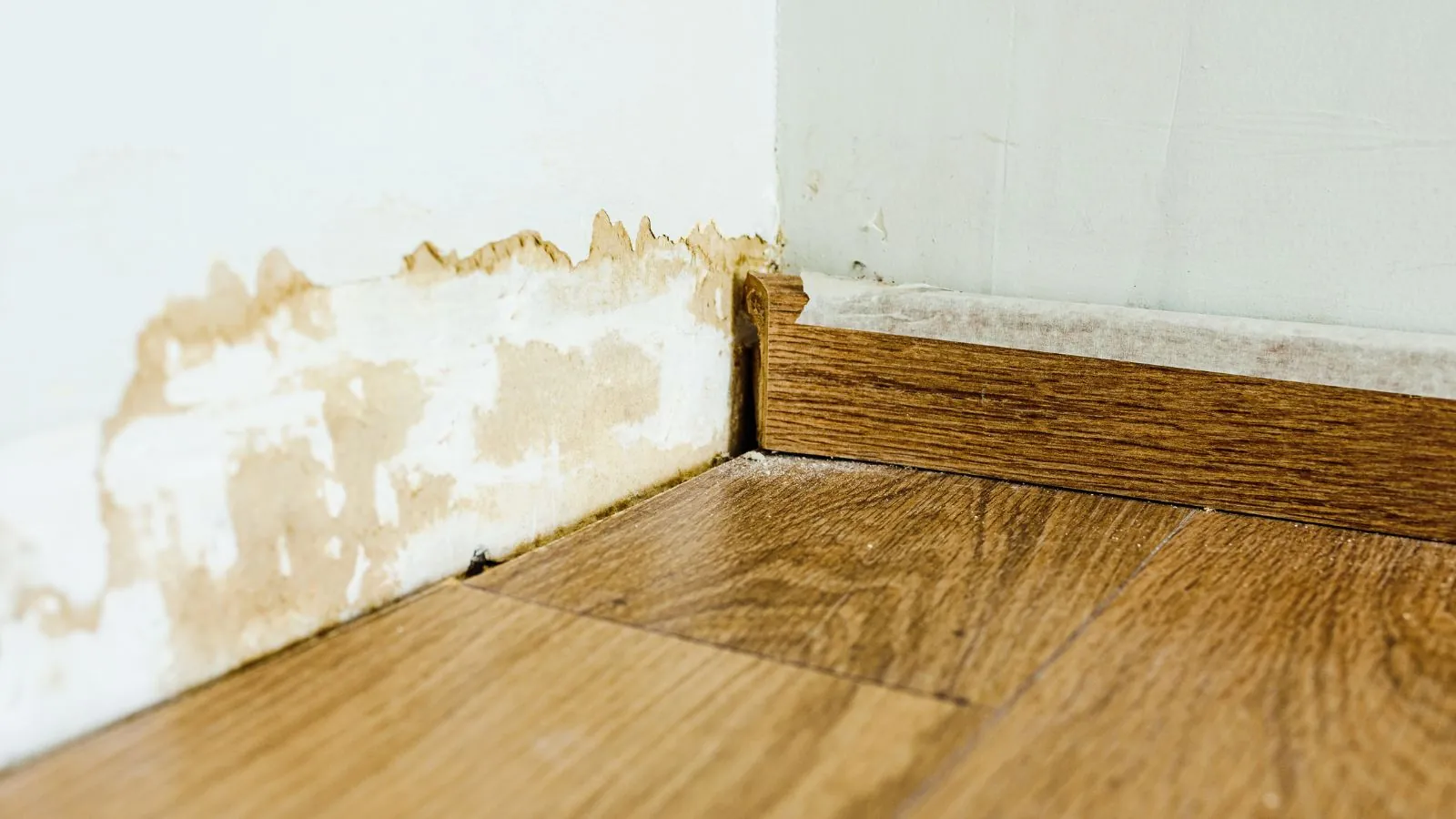
A fresh coat of paint can cover a lot. Water damage that went unnoticed or was patched cosmetically can turn into thousands of dollars of repairs after you own the house.
This guide gives you a checklist for showings and inspections. It does not replace a licensed home inspector, and it is not a guarantee, but it helps you ask better questions.
Start outside
Look at the grade around the foundation. Soil should slope away from the house. Check gutters, downspouts and window wells for clogs and discharge points that dump water near the wall.
Stains on the lower siding, efflorescence on a foundation wall and cracks near the base are all signs that water has been moving. Photograph anything that looks suspicious.
Walk the basement slowly
A basement tells the most. Look for water lines on the wall, rust at the bottom of the furnace or water heater, a musty smell and fresh paint on only part of the wall. Check the sump pit, if there is one, for standing water and a working pump.
Bring a flashlight and look behind stored items. Sellers often stack boxes in front of the worst spots. Ask if you can move a few.
| Sign | What it may mean | Next step |
|---|---|---|
| Efflorescence (white powder) on concrete. | Moisture moving through the wall. | Ask about drainage and past leaks. |
| Fresh paint on one wall. | Possible patch over a stain. | Ask for readings at that spot. |
| Rust at the base of appliances. | Past or ongoing water. | Check the floor and the drain. |
| Musty smell. | Hidden moisture. | Request moisture testing. |
| Sump pump with no discharge line. | Poor drainage planning. | Ask about water history. |
Look up at ceilings and walls
Ceiling stains, bubbling paint and sagging drywall suggest leaks from the roof or from pipes above. Look in the corners, near bathrooms and below the second floor. A stain that has a dry, defined ring may be old, but ask whether the source was fixed.
Use a moisture meter if your inspector has one. A cool spot on a wall or a reading that is much higher than nearby spots can reveal an issue the paint hides. The wall and drywall page explains what readings mean.
Check the crawl space and the attic
If the house has a crawl space, ask the inspector to look in it. Standing water, sagging insulation and a damp earthen floor are signs of trouble. The crawl space page describes the problems that appear there.
In the attic, look for stained decking, wet insulation and daylight around vents and chimneys. These are signs of past or active roof leaks.
Ask the right questions
- Has the house ever had water in the basement, a pipe break or a roof leak?
- What repairs were made, by whom and are there receipts?
- Were insurance claims filed for water damage?
- Is there a sump pump, and has it run recently?
- Is the property in a flood hazard area, and is flood insurance carried?
Ask for answers in writing where you can. New Jersey sellers complete a disclosure form on the property condition, and your attorney or agent can explain how it works.
Before you close: flood maps and insurance
Look up the address on the FEMA Flood Map Service Center and get an insurance quote early. Standard homeowners policies exclude flood damage, and flood insurance takes 30 days to take effect, according to the New Jersey Department of Banking and Insurance.
Use your senses, and your phone
Smell is the first test. A musty basement, a damp closet or a heavy air freshener should prompt questions. Touch walls near the floor, and look for soft spots or paint that flakes. Use your phone flashlight to look along baseboards and behind the water heater.
Take photos of anything unusual, and note the room and the date. If you return for a second showing, compare the photos. Stains that change between visits are active.
What an inspector may add
- Moisture meter readings on walls, floors and ceilings.
- A thermal camera scan that shows cool, wet areas behind surfaces.
- A look at the roof, flashing and attic for leak signs.
- A check of the sump pump, drain and discharge line.
- Notes on grading, gutters and drainage around the foundation.
Ask your inspector what they cannot see, and whether a specialist should look at anything. A finding of high readings may justify a deeper look before closing.
If the report shows active moisture, you can negotiate repairs, a credit or a delay. Your attorney can advise on the contract terms and deadlines.
Red flags that justify a closer look
Some findings should slow a purchase. Active moisture readings, visible mold, a sump pit that is full on a dry day and a seller who cannot explain a patch are all reasons to dig deeper. So is a basement that has been freshly finished with no permit on record.
None of these means you must walk away. They mean the price, the repair plan and the risk deserve a clear discussion with your attorney, your inspector and your insurer before the contingency period ends.
Buying near rivers and lakes in Morris County
Parsippany-Troy Hills lies among the Rockaway and Whippany river systems, and the Lake Hiawatha area flooded in August 2011. Ask the township building department about flood hazard rules and permit history for the property you are considering.
In East Hanover and Morris Plains, which are part of the Whippany-Passaic flood task force area, ask the same questions.
Questions about this topic
No. Inspectors look at visible conditions. Moisture meters and thermal cameras help, but some damage is hidden.
If you see stains, smells or fresh paint, yes. Readings can confirm whether an area is wet.
Ask for receipts, the name of who did the work and the date. Then check the area for readings.
Not always. Dry, repaired damage with documentation may be fine. Active moisture or mold needs a plan.
Ask the township's Division of Construction Code Inspection and Enforcement at 1001 Parsippany Boulevard about permit history for the address.